Best Time for a Helicopter Ride in Rio de Janeiro: Month by Month

May to September is the best time for a helicopter ride in Rio de Janeiro, when the driest air of the year gives pilots the clearest run at Christ the Redeemer and the coastline. July is the driest single month, averaging about 38mm of rain across roughly 7 rainy days, and the whole May to September stretch stays well under the wet-season totals. December through March is the window to book around rather than avoid outright, since afternoon storms are common but flights still go up on clear mornings. We spent years working ground operations at the Lagoa helipad before writing this, so what follows is what we watched happen on the tarmac, not a forecast pulled from an app. If your dates are already fixed, keep reading, since even the wettest months have workable windows once you know how the mountain actually behaves. For the full lineup, see Rio de Janeiro helicopter tours compared side by side.

Quick answer
The best window for a helicopter ride in Rio de Janeiro is May through September, when rainfall drops well below the summer average and Christ the Redeemer holds clear far more often. July is the driest month on the books. December to March is warmer and busier, with afternoon storms that can push a flight to a morning slot but rarely cancel the trip outright.
Key takeaways
- Best window: May to September, led by July's roughly 38mm of rain over about 7 days
- Avoid if clear skies matter most: March, the wettest month at around 163mm over 17 rainy days
- The statue holds cloud more than the beaches do, so a hidden Christ the Redeemer does not always mean a cancelled flight, some operators simply fly the coastal route instead
- Sunset runs from 17:16 in June to 18:37 in December, which changes how late an afternoon flight can still catch golden light
- Every flight we compare, including the most-booked Rio helicopter tour at $220, carries free cancellation up to 24 hours out
- December to February and Carnival week are the busiest and priciest stretch of the calendar, so book those dates further ahead
Seasons at a Glance
The table below reads month by month rather than by season, since two neighboring months can behave quite differently in Rio. Read the Verdict column as our call, not a guarantee: weather still varies day to day inside any month.
| Month | Conditions | Crowds | Verdict |
|---|---|---|---|
| January | Hot, humid, frequent afternoon storms | Peak (New Year) | Fly mornings, book ahead |
| February | Hot and wet, Carnival energy | Peak (Carnival) | Exciting, but expect delays |
| March | Wettest month on the calendar | High | Avoid if clear skies matter |
| April | Rain easing, temperatures dropping | Moderate | Decent shoulder month |
| May | Dry season begins in earnest | Moderate | Strong choice |
| June | Driest cool stretch, mild highs | Moderate to low | Very good, softer light |
| July | Driest month of the year | Low to moderate | Best overall |
| August | Dry and clear, still cool | Moderate | Excellent, dry and clear |
| September | Dry, transitional, quieter | Low | Great value, fewer crowds |
| October | Rain returning gradually | Moderate | Good but less certain |
| November | Wetter, cloud building | Moderate to high | Fair, watch afternoons |
| December | Warm, wet, festive | Peak (holidays) | Festive, book weeks ahead |
No two months here carry the same verdict outright, but the run from June through September is the closest thing to a safe bet the calendar offers. If you can only pick one month, July and August are functionally tied for the driest, clearest air.
Month by Month Over Rio
These are long-term monthly averages for Rio de Janeiro, not a forecast for your specific dates. Treat every figure as typical rather than guaranteed, and check the current forecast close to your flight.
| Month | Avg high | Avg low | Rainfall | Rainy days |
|---|---|---|---|---|
| January | 30°C | 25°C | 112mm | 13 |
| February | 29°C | 24°C | 146mm | 17 |
| March | 30°C | 24°C | 163mm | 17 |
| April | 27°C | 22°C | 95mm | 13 |
| May | 26°C | 20°C | 77mm | 10 |
| June | 26°C | 20°C | 44mm | 9 |
| July | 25°C | 18°C | 38mm | 7 |
| August | 25°C | 18°C | 75mm | 11 |
| September | 27°C | 20°C | 55mm | 8 |
| October | 27°C | 21°C | 98mm | 15 |
| November | 26°C | 21°C | 135mm | 17 |
| December | 28°C | 23°C | 143mm | 17 |
Winter highs sit near 25 to 26 degrees Celsius in June and July, mild enough that a doors-off flight never feels cold. July is the driest month at roughly 38mm over about 7 rainy days, while March is among the wettest at close to 163mm across 17 rainy days, and December brings a similar 143mm over roughly 17 rainy days. The wettest and cloudiest stretch of the year runs from November to March.
These figures come from long-term climate normals; Brazil's national meteorological institute, INMET, is the reference source, and it is worth a quick check of the live forecast in the days before you fly. Last verified: August 2026.
Best Season by Traveler Type
If You want the sharpest photos of the statue
Fly May to September, when cloud on Corcovado is least frequent and the air holds less haze
If You are traveling with kids
Aim for May, June or September, with milder heat and calmer, drier air overall
If This is your one shot and you cannot afford a reschedule
Book July or August, the two driest, most dependable months on the table
If You want the lowest-key crowds and still solid odds
September is the quiet corner of the dry season, before October's rain starts creeping back
If You are set on visiting for Carnival or New Year
Go, but fly a morning slot and book your time well ahead of December to February

Best Time of Day
Book the first flight slot of the morning if a clear, cloud-free view of Christ the Redeemer matters more than anything else. Convective cloud tends to build over the Corcovado ridge as the day heats up, so the earliest departures of the day catch the statue clean more often than a mid-afternoon slot does.
If the photograph itself is the priority rather than the guarantee, an afternoon flight in the final hour or two before sunset delivers the richest light on the beaches and the bay, the kind of low, golden angle that flattens the city's grid into gold and shadow. How late you can chase that light depends on the season: sunset falls as early as 17:16 in June and stretches to 18:37 in December, a difference of well over an hour.
| Month | Sunset |
|---|---|
| March | 18:04 |
| June | 17:16 |
| September | 17:49 |
| December | 18:37 |
Our recommendation stands either way: mornings for the safest bet on visibility, the last golden hour before sunset if you're chasing the photo and can accept slightly higher cloud odds. The 30-minute Christ the Redeemer flight runs both morning and late-afternoon departures, so you can pick the version that matches your priority.
What Actually Grounds a Flight
Most travelers assume rain is what cancels a helicopter ride over Rio. In practice, light rain rarely stops a flight on its own, since a helicopter tolerates a wet windshield far better than it tolerates a low ceiling. What actually grounds a flight is cloud sitting too low over the route, or wind and turbulence strong enough to make the ride unsafe, not the presence of rain by itself.
Rio's helicopter operators fly under Brazil's civil aviation rules for commercial sightseeing, ANAC's RBAC 135, which sets certification, crew licensing and operating limits. Inside that framework, the pilot in command makes the call for each flight based on the ceiling, visibility and wind on that specific route that day, which is why one flight can go up an hour after another was held on the ground. Operators do not publish a cancellation rate, so treat any risk described here as qualitative: low, moderate or higher, tied to the rainfall pattern in the table above, never a hard percentage.
Wind and cloud aside, the routine on the ground stays the same in every season, and what happens from check-in to landing covers it step by step.
If the Statue Is in Cloud
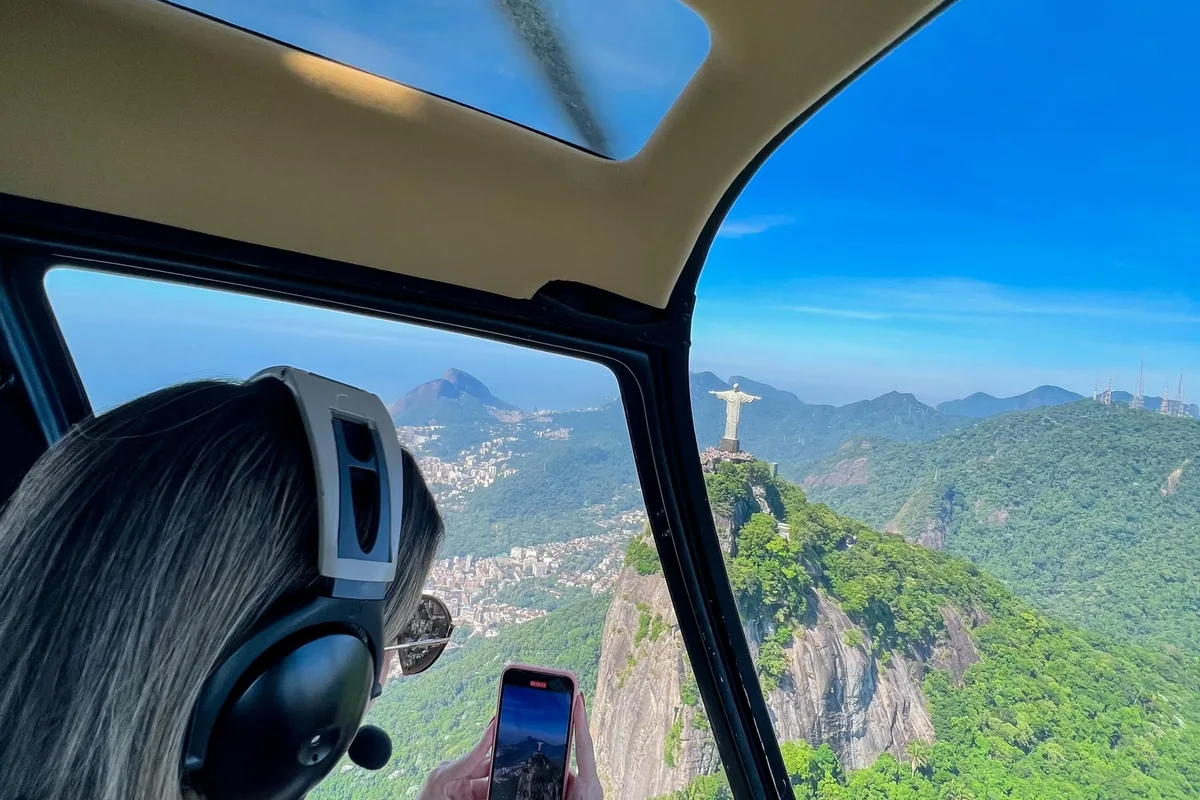
This is the part almost nobody explains clearly: a hidden Christ the Redeemer is not the same thing as a cancelled flight. The statue stands at 709 metres on Corcovado, a forested ridge that catches and holds cloud far more stubbornly than the low coastal strip below it. On plenty of mornings the beaches sit under open sky while the summit is wrapped in a grey collar that can take hours to burn off.
Because the two zones behave so differently, several operators simply fly the coastal route instead of cancelling when the statue itself is socked in. You still get airborne, still see Sugarloaf, Copacabana, Ipanema and the bay, and if the cloud lifts mid-flight the pilot will often swing back toward Corcovado before you land. It is a genuinely different flight from the one you planned, not a lesser one, and it is the reason cloud on the statue alone should not be your main worry when picking a date.
If circling Christ the Redeemer up close is the entire point of your trip, stack the odds by flying May to September and booking a morning slot. If you are more relaxed about which landmark headlines the flight, the coastal fallback means a grey morning on Corcovado rarely costs you the whole experience.
If Your Flight Is Cancelled
Every flight we compare carries free cancellation up to 24 hours before departure, and if the operator itself cancels for weather, you are not simply out the money: the standard is a free reschedule or a refund. What differs is the scenario, so here is how the common ones actually play out.
| Scenario | What happens | Your move |
|---|---|---|
| Cloud is sitting on the statue, but the beaches are clear | Many operators fly the coastal route instead of cancelling | Confirm with the operator whether the route will change before assuming it's off |
| Wind or a storm is genuinely unsafe for the route | The pilot holds the flight; you're offered a reschedule or refund | Keep a spare morning open later in your trip if the forecast looks marginal |
| The operator delays departure by an hour or two | You wait at the helipad or are asked to return later that day | Build slack into your schedule rather than booking the last slot of your trip |
| You cancel more than 24 hours before departure | Full refund under the standard policy on every flight we compare | Cancel as early as you can once your plans firm up |
| You cancel inside 24 hours of departure | This is a traveler-side cancellation, not a weather one, and it typically forfeits the refund | Treat the 24-hour line as a hard deadline if your plans are still shifting |
The one habit that protects you most is booking your flight for an early morning in the first half of your trip rather than the last available slot before you fly home. A morning booking leaves the rest of the day, and often the next day too, as reschedule room if the weather doesn't cooperate.
So When Should You Book
Book May through September if you can choose, and lean toward July or August if you want the single safest bet on clear skies. September is the quieter, still-dry runner-up if you'd rather avoid the small crowd bump those two peak dry months bring. Avoid stacking all your hope on March, the wettest month on the table, if a clear view of Christ the Redeemer is the whole reason you're flying.
How far ahead to book depends on the season, not a fixed rule. Through the dry months a few days' notice is usually enough outside of holiday weekends. Around Carnival, New Year and the December to February peak, book several weeks out, since slots for the best-helicopter tour at $220 (about R$1,146 at the R$5.21 rate we checked on 14 August 2026) and other popular routes fill early.
Whichever window you land in, the free 24-hour cancellation on every flight we compare means booking early costs you nothing if plans change later.
Shoulder-season slots are also where the money works hardest, and what each tier of flight actually costs sets out the ladder in dollars and reais.
Frequently Asked Questions
What time of day gives the clearest view of Christ the Redeemer?
The first flight slot of the morning, before afternoon cloud tends to build over the Corcovado ridge. If you're chasing golden-hour photos instead, the last hour or two before sunset is better, at the cost of slightly higher cloud odds on the statue itself.
Do helicopter flights run in Rio's summer rain?
Often, yes. Light rain rarely grounds a flight on its own; what actually stops a departure is a low cloud ceiling or unsafe wind, not rain by itself. December through March brings more of both, so summer flights sometimes shift to a morning slot rather than being cancelled outright.
What happens if your flight is cancelled for weather?
You're offered a free reschedule or a refund, the standard across every flight we compare. If only the statue is clouded in, some operators fly the coastal route past Sugarloaf and the beaches instead of cancelling at all.
How far ahead should you book a helicopter flight over Rio?
A few days is typically enough from May to September outside holiday weekends. Book several weeks ahead for December through February and Carnival week, when slots on the most popular routes fill early.
Why does Christ the Redeemer disappear on a clear beach day?
The statue sits at 709 metres on a forested ridge that catches and holds cloud far more than the low coastal strip does, so it's common for the beaches to sit under open sky while the summit stays wrapped in cloud for hours.
Can you still fly if the statue is hidden in cloud?
Usually. Several operators switch to the coastal route over Sugarloaf, Copacabana and Ipanema instead of cancelling, and the pilot will often swing back toward Corcovado if the cloud lifts during the flight.
We watched enough clear mornings turn cloudy by noon at the Lagoa helipad to trust the pattern over any single forecast icon: fly early in the day, fly between May and September if your dates are flexible at all, and treat a clouded statue as a possible change of route rather than a lost trip. Every flight we compare keeps that free 24-hour cancellation window either way, so the safest move is simply to book the morning you actually want and let the policy cover the rest.